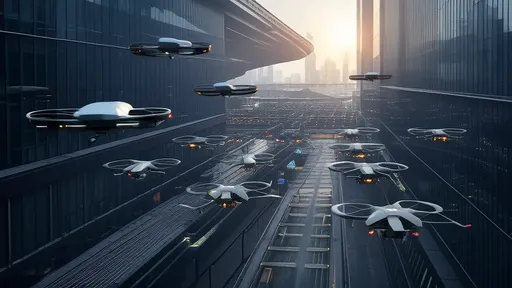
The concept of urban aerial corridors is no longer confined to the realm of science fiction. As cities grow denser and ground transportation becomes increasingly congested, the idea of a three-dimensional traffic network for drone-based cargo delivery is gaining traction. This innovative approach promises to revolutionize logistics, offering a faster, more efficient way to move goods through crowded urban landscapes.
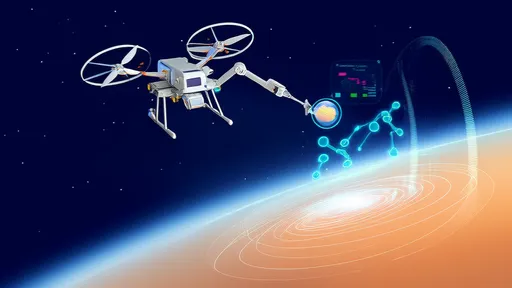
At the heart of this transformation lies the rapid advancement of drone technology. Modern cargo drones are no longer experimental gadgets but sophisticated machines capable of carrying substantial payloads over meaningful distances. Companies are investing heavily in developing drones that can navigate complex urban environments autonomously, avoiding obstacles and adhering to strict flight paths. The emergence of these reliable aerial carriers has made the vision of urban air mobility increasingly plausible.
The infrastructure required for such a system presents both challenges and opportunities. Unlike traditional roads, aerial corridors exist in three-dimensional space, allowing for more efficient routing and reduced congestion. However, establishing these pathways requires careful planning to ensure safety and minimize noise pollution. Cities around the world are beginning to experiment with designated drone lanes, creating the foundation for what could eventually become comprehensive aerial highway systems.
One of the most compelling advantages of drone-based cargo delivery is its potential to alleviate ground traffic. As e-commerce continues to grow, delivery trucks are putting increasing strain on urban road networks. By shifting a portion of this load to the skies, cities could see significant reductions in congestion and emissions. This is particularly relevant for time-sensitive deliveries, where drones can provide rapid transport without being hindered by traffic jams or road closures.
The regulatory landscape is evolving to accommodate this new form of transportation. Aviation authorities in several countries are working to establish rules that ensure the safe integration of cargo drones into shared airspace. These regulations address critical issues such as altitude restrictions, right-of-way protocols, and communication requirements between drones and air traffic control systems. The development of standardized operating procedures will be crucial for scaling up urban drone operations.
Technological innovations are addressing many of the practical challenges associated with urban drone delivery. Advanced battery systems are extending flight ranges, while sophisticated sense-and-avoid technologies are improving safety. Meanwhile, the development of vertiports—specialized landing and takeoff facilities for drones—is creating the necessary ground infrastructure to support widespread operations. These hubs serve as the interface between aerial and ground logistics networks.
The economic implications of urban aerial corridors are significant. By reducing delivery times and transportation costs, drone networks could fundamentally change supply chain dynamics. Small businesses might gain access to same-day delivery capabilities previously available only to large corporations. The reduced need for warehouse space in urban centers could alter real estate markets, while new maintenance and operation services would create employment opportunities in emerging technical fields.
Public acceptance remains a critical factor in the successful implementation of drone corridors. Concerns about privacy, noise, and safety must be addressed through thoughtful urban planning and transparent communication. Some cities have initiated pilot programs that allow residents to experience the benefits of drone delivery firsthand, helping to build trust in the technology. As people become more familiar with seeing drones overhead, resistance is likely to diminish.
The environmental impact of drone delivery systems presents a mixed picture. While electric drones produce zero emissions during flight, the increased energy demand and battery production have their own ecological footprint. However, when compared to traditional delivery methods, particularly in congested urban areas where vehicles frequently idle in traffic, drone networks could offer substantial net environmental benefits. The key lies in powering these systems with renewable energy sources.
Looking ahead, the integration of drone corridors with other emerging technologies could unlock even greater potential. The combination of 5G networks, artificial intelligence, and the Internet of Things could create a seamlessly connected transportation ecosystem. Drones might communicate with smart city infrastructure to optimize routing in real time, adjusting flight paths based on weather conditions, air traffic, or temporary no-fly zones.
The development of urban aerial corridors represents more than just a new delivery method—it signals a fundamental shift in how we conceptualize urban transportation. As cities continue to grow vertically, it makes sense that their transportation networks should do the same. While challenges remain, the potential benefits in terms of efficiency, sustainability, and economic opportunity make the pursuit of drone-based cargo networks a compelling proposition for the cities of tomorrow.

By /Jul 28, 2025

By /Jul 28, 2025

By /Jul 28, 2025
By /Jul 28, 2025

By /Jul 28, 2025

By /Jul 28, 2025
By /Jul 28, 2025

By /Jul 28, 2025

By /Jul 28, 2025

By /Jul 28, 2025

By /Jul 28, 2025

By /Jul 28, 2025

By /Jul 28, 2025

By /Jul 28, 2025

By /Jul 28, 2025

By /Jul 28, 2025

By /Jul 28, 2025
By /Jul 28, 2025

By /Jul 28, 2025

By /Jul 28, 2025