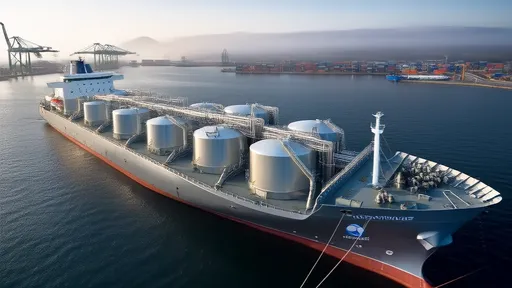
The maritime industry, long criticized for its heavy reliance on fossil fuels, is undergoing a quiet revolution as ammonia emerges as a frontrunner in the race toward zero-carbon shipping. Unlike battery-powered vessels or hydrogen fuel cells—which face limitations in energy density and infrastructure—ammonia offers a chemically stable method of storing hydrogen that aligns with existing logistics networks. The recent launch of the world's first ammonia-fueled cargo ships marks a pivotal moment, signaling that the era of carbon-intensive bunker fuel may finally be approaching its sunset.
Why Ammonia? The Invisible Backbone of Hydrogen Economy
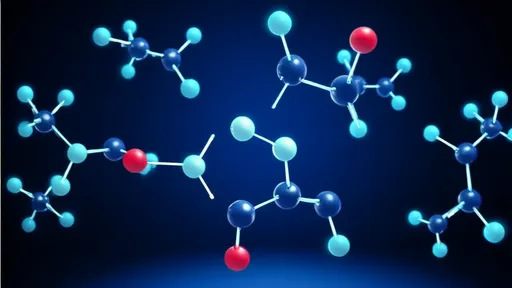
Ammonia’s appeal lies in its paradoxical nature: a toxic chemical yet an elegant hydrogen carrier. Each molecule of ammonia (NH3) contains three hydrogen atoms, which can be extracted through cracking or directly combusted in modified engines. What sets it apart is its liquid state at -33°C or under moderate pressure—far more practical than hydrogen’s cryogenic requirements (-253°C). This allows ammonia to leverage existing oil tanker infrastructure with minor retrofits, a crucial advantage for an industry resistant to radical overhauls.
Shipping giants like Maersk and Mitsui OSK Lines have quietly invested in ammonia dual-fuel engines, recognizing its 40% higher energy density than liquid hydrogen. "It’s not about reinventing the wheel," says Dr. Elena Rodriguez, a naval architect at the Maritime Research Institute Netherlands. "We’re adapting a century-old Haber-Bosch process—currently used for fertilizers—to store renewable energy. The irony? The same chemical that feeds humanity could now power its supply chains."
The Bunker Fuel Challenge: A 300-Million-Ton Problem
International shipping accounts for nearly 3% of global CO2 emissions—equivalent to Germany’s entire carbon footprint. Traditional marine diesel emits 3.1kg of CO2 per kilogram burned, whereas ammonia combustion releases zero carbon when produced using green hydrogen. The catch? Today’s ammonia production still relies on fossil fuels, contributing 1.8% of worldwide CO2 emissions. Pilot projects like Australia’s HIFAR initiative aim to change this, combining offshore wind with electrolyzers to produce "green ammonia" at $400/ton—competitive with conventional bunker fuel at current carbon prices.
Engine manufacturers face their own hurdles. Wärtsilä’s recent tests revealed that ammonia burns at just 20% the speed of diesel, requiring novel injection systems. Meanwhile, nitrogen oxide (NOx) emissions—a byproduct of ammonia combustion—must be scrubbed using selective catalytic reduction, adding complexity. "It’s a three-dimensional chess game," admits Wärtsilä’s Chief Technology Officer. "We’re optimizing flame propagation while redesigning exhaust aftertreatment, all within the same engine footprint."
From Lab to Ocean: The First Ammonia-Powered Voyages
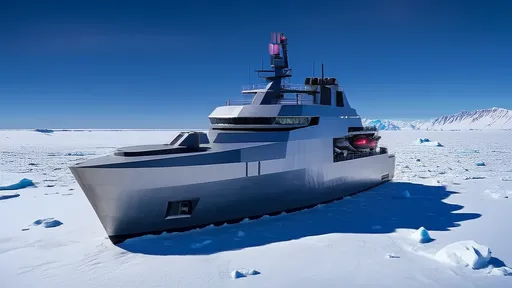
In March 2024, the Green Pioneer, a 40,000-ton bulk carrier retrofitted by Singapore’s Keppel Offshore & Marine, completed its maiden voyage from Brisbane to Yokohama using 95% ammonia fuel blend. The vessel’s modified MAN Energy Solutions engine demonstrated a 12% efficiency loss compared to diesel—a trade-off deemed acceptable given the carbon savings. More telling was the cargo: iron ore destined for green steel production, creating a fully decarbonized logistics loop.
Classification societies are racing to update safety protocols. Ammonia’s toxicity requires double-walled fuel tanks and AI-powered leak detection systems. DNV’s new Ammonia Ready notation mandates crew training in emergency purging procedures, acknowledging that a 5,000ppm ammonia concentration can be lethal. "We’re borrowing protocols from LNG carriers but adding biomedical safeguards," explains DNV’s maritime CEO Knut Ørbeck-Nilssen. "Every fuel valve now has biometric authentication to prevent accidental releases."
The Chicken-and-Egg Dilemma: Fuel Availability vs. Vessel Demand
Currently, global green ammonia production stands at a meager 0.1 million tons annually—enough to fuel just ten Panamax ships. However, 78 new ammonia terminals have been announced since 2023, with Yara’s Norwegian plant leading the charge at 500,000 tons/year capacity. The economics are shifting: BloombergNEF predicts green ammonia will undercut blue ammonia (made from natural gas with carbon capture) by 2031 as electrolyzer costs plummet below $200/kW.
Shipowners face a strategic quandary. Newbuild ammonia-capable vessels command a 15-20% premium, while retrofits cost $8-12 million per ship. The Kamsarmax standard—a 82,000-ton bulk carrier design by Shanghai Waigaoqiao Shipbuilding—incorporates ammonia tanks from inception, reducing conversion risks. "This isn’t another LNG transition where early adopters got stranded," asserts BIMCO’s chief analyst. "Ammonia’s dual role as fertilizer and fuel creates a natural demand buffer."
Beyond Chemistry: The Geopolitical Ripple Effects
Ammonia’s ascent could redraw energy trade maps. Countries with abundant renewables—Australia, Chile, and Namibia—are positioning themselves as ammonia exporters, while traditional oil powers invest in blue ammonia as a transitional solution. Saudi Arabia’s NEOM project aims to produce 1.2 million tons/year of green ammonia by 2026, with Japan’s JERA already securing offtake agreements. The implications are profound: future bunkering hubs may emerge near solar farms rather than oil fields.
Regulatory tailwinds are accelerating adoption. The IMO’s Carbon Intensity Indicator (CII) ratings now penalize conventional fuels so severely that ammonia becomes the cheapest compliance option for routes like Asia-Europe by 2027. The EU’s inclusion of shipping in its Emissions Trading System adds further pressure, with ammonia-powered ships exempt from carbon taxes until 2034. "We’ve reached the tipping point where sustainability equals profitability," notes a Geneva-based commodities trader. "The forward curves for ammonia bunker fuel are already pricing in scarcity premiums."
As dawn breaks over the Rotterdam waterfront, where the first dedicated ammonia bunkering barge began operations last month, the maritime industry glimpses a future where exhaust stacks emit only water vapor and nitrogen. The journey won’t be smooth—ammonia’s toxicity ensures rigorous safety debates, and renewable energy shortages may delay green production scales. Yet for an sector that has powered globalization on the dirtiest fuels, ammonia represents more than a chemical alternative; it’s a bridge between maritime traditions and a carbon-constrained world. The ships of tomorrow may still smell of the sea, but their engines will whisper of hydrogen harvested from wind and sun.
By /Jul 28, 2025

By /Jul 28, 2025

By /Jul 28, 2025

By /Jul 28, 2025

By /Jul 28, 2025

By /Jul 28, 2025

By /Jul 28, 2025

By /Jul 28, 2025

By /Jul 28, 2025

By /Jul 28, 2025

By /Jul 28, 2025

By /Jul 28, 2025

By /Jul 28, 2025
By /Jul 28, 2025

By /Jul 28, 2025

By /Jul 28, 2025

By /Jul 28, 2025
By /Jul 28, 2025
By /Jul 28, 2025
By /Jul 28, 2025