The mining and tunneling industries have long struggled with the challenges of accurate positioning in underground environments. Traditional radio frequency-based systems often fail to deliver reliable performance due to signal interference, multipath effects, and the complex geometry of underground spaces. However, recent advancements in millimeter-wave (mmWave) technology are offering a promising solution to these persistent problems.
Millimeter-wave frequencies, operating in the 30 GHz to 300 GHz range, possess unique properties that make them particularly suitable for underground positioning applications. Unlike lower frequency signals that easily diffract around obstacles, mmWave signals travel in more direct paths, enabling precise distance measurements through time-of-flight calculations. This characteristic significantly reduces the multipath interference that plagues conventional positioning systems in confined underground spaces.
The core advantage of mmWave technology lies in its inherent resistance to electromagnetic interference. Underground environments are typically saturated with noise from heavy machinery, power cables, and other electronic equipment operating at lower frequencies. Millimeter-wave systems operate far above these common interference sources, effectively creating a clear communication channel for positioning data. This spectral separation allows mmWave devices to maintain signal integrity even in electrically noisy mining conditions.
Recent field tests in deep coal mines have demonstrated the remarkable robustness of mmWave positioning systems. In scenarios where traditional RF-based systems experienced complete signal degradation, mmWave solutions maintained positioning accuracy within 10 centimeters. This level of precision is unprecedented in underground navigation and has immediate implications for worker safety, equipment tracking, and autonomous mining operations.
Implementation challenges remain, particularly regarding signal penetration through dense materials. While mmWave signals excel in line-of-sight conditions, they can be attenuated by certain types of rock formations and metallic structures. Engineers are addressing this limitation through hybrid system designs that combine mmWave with complementary technologies like ultra-wideband (UWB) for comprehensive coverage. These hybrid approaches leverage the strengths of each technology while mitigating their individual weaknesses.
The development of specialized mmWave antennas for underground use represents another critical advancement. Unlike conventional antennas designed for open-air applications, these specialized units account for the unique propagation characteristics of confined spaces. Their directional properties and adaptive beamforming capabilities help maintain signal integrity even when operating near reflective surfaces or through narrow mine shafts.
Power efficiency has emerged as a surprising benefit of underground mmWave systems. Contrary to initial expectations, the short-range nature of most underground positioning requirements allows mmWave transceivers to operate at relatively low power levels. This characteristic is particularly valuable in mining applications where energy resources are often limited. Modern mmWave chipsets now offer positioning functionality with power consumption profiles comparable to, or even better than, traditional RF solutions.
Regulatory considerations for mmWave deployment in underground environments differ significantly from surface applications. The confined nature of mines and tunnels creates a contained radio environment where spectrum allocation rules can be more flexible. This regulatory environment enables mining operators to implement customized mmWave solutions without facing the same interference concerns that affect surface deployments in urban areas.
The integration of mmWave positioning with existing mine communication infrastructure presents both opportunities and challenges. While the high data capacity of mmWave links allows for rich positioning data streams, it requires careful network planning to avoid congestion. Leading solution providers are developing intelligent bandwidth allocation algorithms that dynamically prioritize positioning data alongside other critical communications.
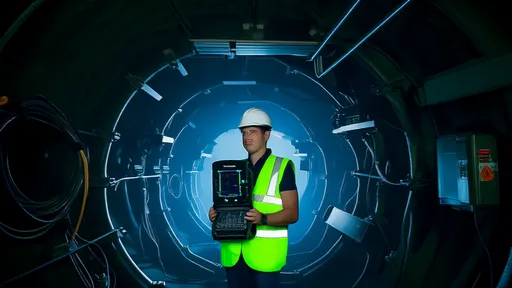
Worker safety applications are driving immediate adoption of mmWave positioning technology. Real-time location systems based on mmWave can track personnel with unprecedented accuracy, enabling rapid response in emergency situations. The technology's immunity to electromagnetic interference ensures reliable operation even during power surges or equipment failures that might disable conventional systems.
Looking ahead, the combination of mmWave positioning with emerging technologies like edge computing and artificial intelligence promises to unlock even greater capabilities. Local processing of positioning data at the network edge can reduce latency while AI algorithms can predict and compensate for potential signal obstructions. These advancements will be particularly valuable for autonomous mining equipment that requires real-time, high-precision positioning.
The economic case for mmWave positioning in underground environments is strengthening as the technology matures. While initial implementation costs remain higher than traditional systems, the long-term benefits in terms of improved safety, operational efficiency, and equipment utilization are proving compelling. Early adopters in the mining sector report measurable improvements in productivity and significant reductions in positioning-related downtime.
Standardization efforts are underway to ensure interoperability between different manufacturers' mmWave positioning systems. Industry consortiums recognize that widespread adoption will require common protocols for frequency usage, data formats, and interface standards. These standardization initiatives are critical for creating a robust ecosystem of compatible devices and applications.
Training and workforce development represent another important consideration for successful mmWave deployment. The technology's unique characteristics require specialized knowledge for proper installation and maintenance. Forward-thinking mining companies are already investing in training programs to build internal expertise in mmWave systems and their underground applications.
As mmWave technology continues to evolve, its applications in underground positioning are expected to expand beyond mining into tunneling, underground storage, and even urban subterranean infrastructure. The fundamental advantages of interference resistance and high precision apply equally to these diverse environments. What began as a niche solution for challenging mining conditions may well become the standard for all types of underground positioning requirements.
The successful implementation of mmWave positioning systems in underground environments demonstrates how advanced RF technologies can solve long-standing industrial challenges. By overcoming the interference problems that limited previous solutions, mmWave is opening new possibilities for safety, automation, and efficiency in some of the world's most demanding work environments.

By /Aug 26, 2025

By /Aug 15, 2025

By /Aug 26, 2025

By /Aug 26, 2025
By /Aug 15, 2025

By /Aug 15, 2025

By /Aug 15, 2025
By /Aug 15, 2025

By /Aug 15, 2025

By /Aug 15, 2025

By /Aug 26, 2025

By /Aug 15, 2025

By /Aug 15, 2025

By /Aug 26, 2025

By /Aug 15, 2025

By /Aug 15, 2025

By /Aug 15, 2025
By /Aug 15, 2025

By /Aug 15, 2025

By /Aug 15, 2025